

September – hits and misses
What a lovely month it's been for the garden. Plenty of rain and mild temperatures have given many plants a second wind, and parts of the place have been looking as good as they ever have.
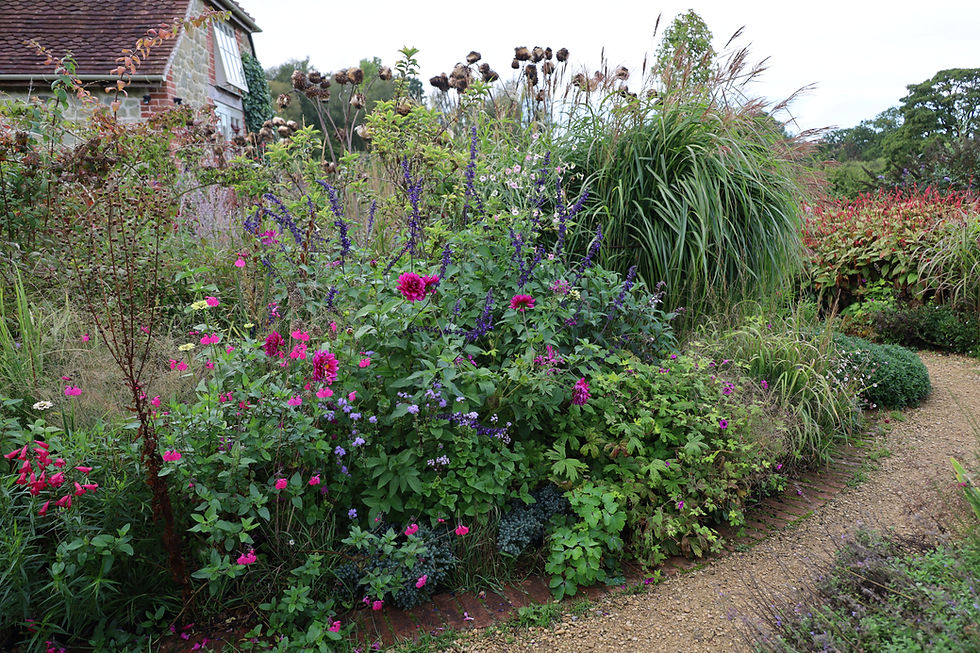


We’ve also been assessing the performance of a few annual bedding plants that made their garden debut this summer. It’s been a successful year for new additions, with several promising discoveries earning a place on our ‘definite keepers’ list.
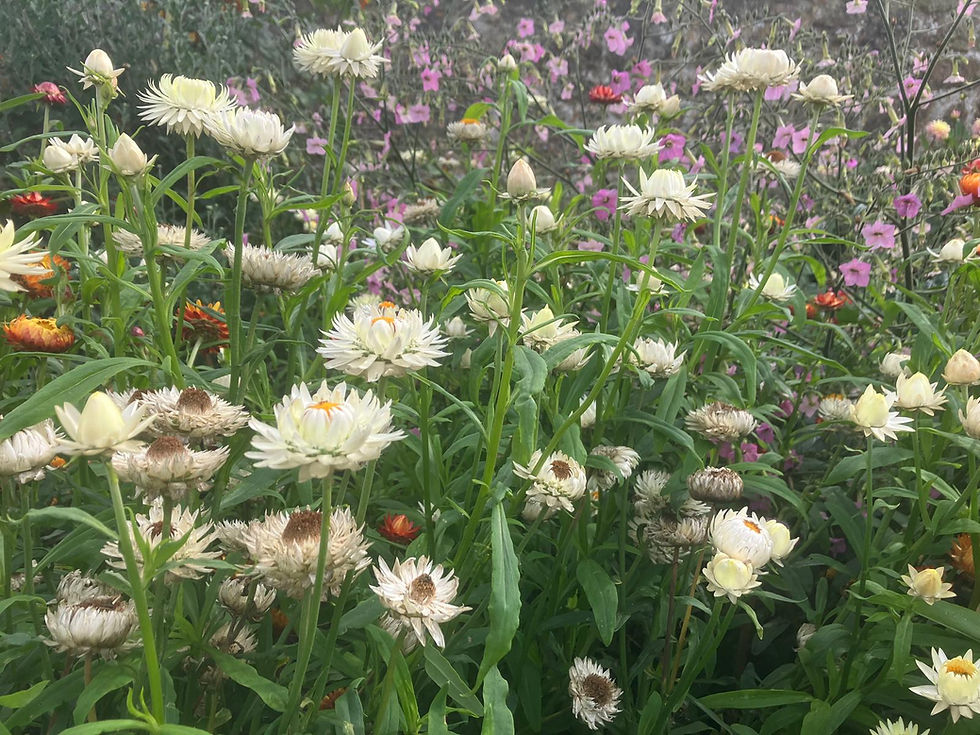
Also known as strawflower, or everlasting flower, the copper-red form of Helichrysum bracteatum has been a standout star. Generous in both height and flowering, it really adds something to the Hot Border – and shows no sign of slowing down yet. The extreme summer drought conditions into which it was planted didn’t seem to give it a moment’s pause, and yet it looks equally happy after a days-long deluge of heavy rain. It’s what we refer to in gardening as ‘a real doer’, and it’s safe to say it will be making a return next year.


Sadly, the white form hasn’t impressed quite as much. While its clear, snowy flowers are lovely in their prime, they quickly develop a rather mucky, mildewed appearance that lets them down. Thanks for your time, white, but it’s a no from us.
And then there’s Salpiglossis sinuata ‘Kew Blue’. This proved to be a real head-turner, with many a visitor to the garden stopping to enquire about the unusual beauty. A cultivated form of a Brazilian species in the nightshade family, it bears large, intensely coloured blooms that live up to the common name of velvet trumpet flower. Planted with the first wave of summer bedding in May, it coped admirably with the searing heat, adding real depth of colour when woven through the Studio Garden and New Ambition area. It was the container-grown plant in the greenhouse, however, that put on the most impressive display, and it will certainly retain a place in our roster of glasshouse display plants from now on.

Ageratum houstonianum, also known as floss flower or Mexican paintbrush, has been another hit. We tried a true blue form, ‘Dondo Blue’, and the magenta ‘Red Flint’, with both exceeding our expectations. They proved happy in a range of light levels, making them welcome additions to our arsenal of reliable old faithfuls – the sort of plants you can stick almost anywhere to fill a gap. The name Ageratum is derived from the Greek ‘ageratos’ – meaning ‘not growing old’ or ‘everlasting’ – referring to the flowers’ ability to remain fresh and vibrant for an unusually long time. With the fluffy, powderpuff blooms still going as strong as when they first appeared in July, we can certainly concur with that one!

So, what failed to impress this year? Despite being widely touted as generous bloomers that make excellent cut flowers, the zinnias we trialled sadly didn’t deliver on their promise. “Maybe it’s our variety choices,” Bella says, “but all we seem to end up with is a single stem bearing a single flower that just sits there, refusing to do any more.”

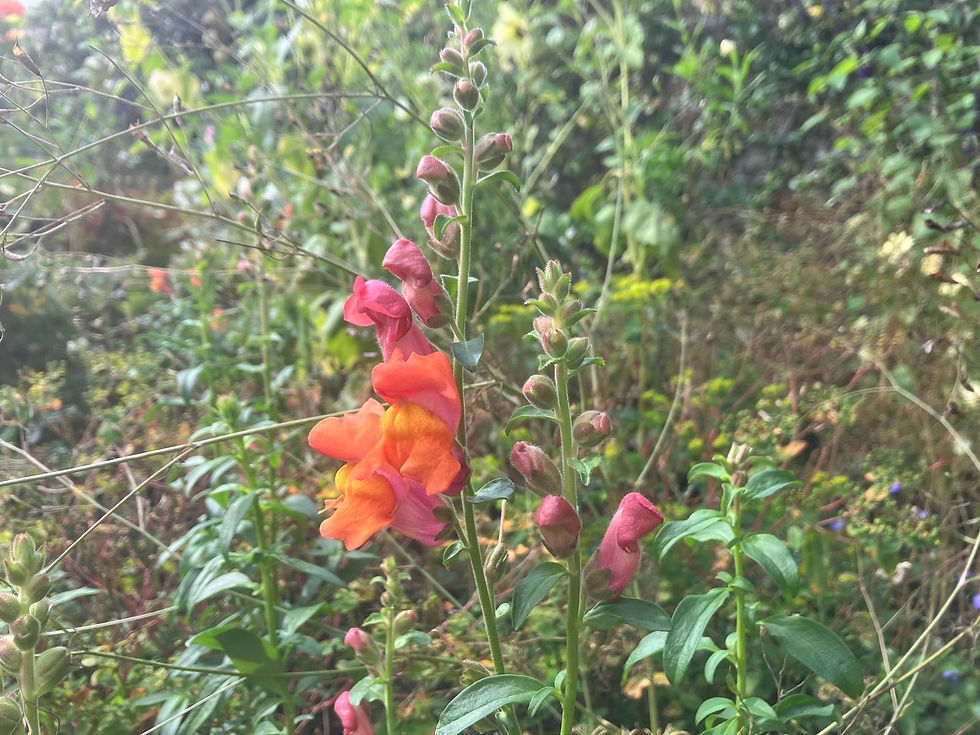
Nor was Bella enamoured with the snapdragons we experimented with this year. "Even for me, the colour combinations are a bit much", she remarks. "Orange and pink, for example. I'm finding myself increasingly interested in the in-between colours – the ones it's harder to put a name to".
We’ll leave you with an autumnal shot of The Walking Men, whose arrival we wrote about in last month’s blog post. While Johnnie has taken to calling them the garden gnomes, perhaps another name could be Marmite Men… Feedback from readers, visitors and neighbours has been entertainingly polarised, with opinions seemingly divided between love and loathing. Either way, they're certainly memorable – and proving to be a real talking point.

Until next month!


Comments