

July – parched
Updated: Aug 3
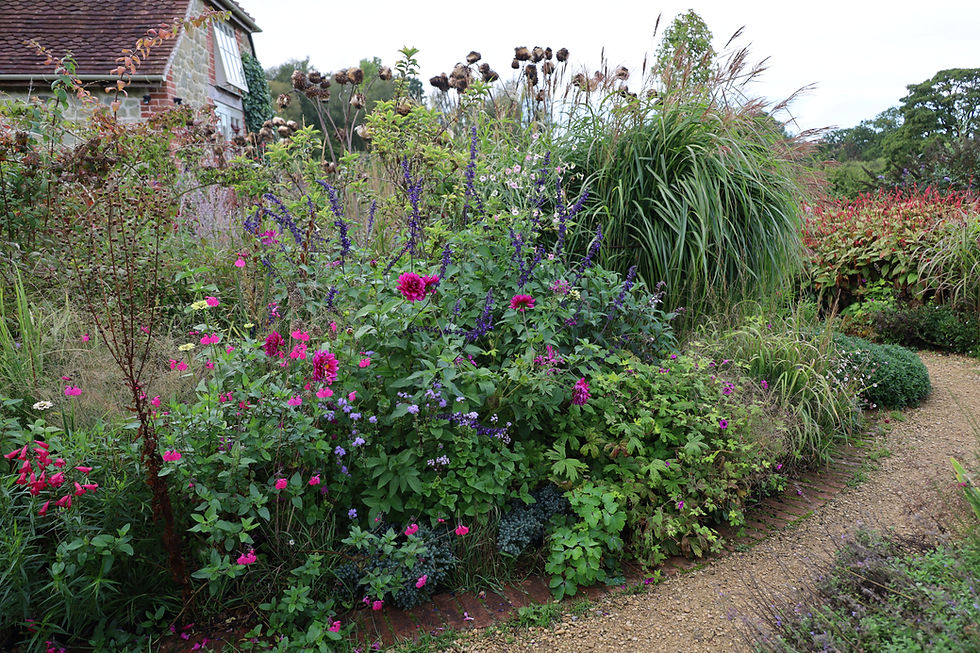
It's been a challenging few weeks at Gasper Cottage, with temperatures soaring to 36°C and a complete absence of rainfall pushing the garden to the limits of what it can withstand. Our free-draining, sandy soil is naturally prone to drying out, and while the tonnes of mulch we apply each year help to retain moisture, it can only do so much in the face of such prolonged and extreme conditions.
The arrival of easterly winds last week was bittersweet. For us, it made working outdoors more bearable, but for the plants it was bad news – only serving to dry the garden out even further.
Thankfully, we have still been able to water, as there is currently no hosepipe ban in this part of the country. Even so, watering has been limited to only the most intensively cultivated borders around the house as well as the main lawn. These areas have received an hour or two of sprinkler irrigation each week – just enough to provide essential relief. The more naturalistic, further out areas – including the Railway Garden, the Orchard Meadow, and the Forest Garden – have had to fend for themselves.


And then – there have been the annuals. Without years of deep, searching root growth to sustain them, these short-lived plants are far more vulnerable to drought. This is especially true when they are newly planted, and unfortunately, the searingly hot, dry spell coincided almost perfectly with our transition from early to late-summer bedding. Much of our heatwave has therefore been spent planting out the likes of ageratum, cosmos, cleome, salvias and other late-summer performers.
This midsummer planting push has always been the exception to the well-worn advice of sticking to the kinder conditions of spring and autumn. With the plants in question all being sun and heat worshippers, however, they have usually needed little more than a few deep soaks to set them on their way. But with soil moisture reserves almost non-existent this year, we knew special measures would be needed.
Plant a dry plant into parched soil and, even with regular watering, its chances are slim. Plant a well-hydrated plant into moist ground, however, and the outlook improves dramatically. To achieve this, we thoroughly soak each plant in a bucket of water while the planting hole is being prepared. The hole is then filled with water, which, within a minute or so, drains into the surrounding soil. This is the moment when plant meets soil, with a reservoir of moisture already in place to give it the best possible start.
Another good soak after planting helps settle the roots in, while a generous layer of mulch helps retain all that moisture and see the plant through those critical first weeks.


With hundreds of young annuals to weave through borders that are now at their fullest, this wave of planting is a challenging task that requires a light-footed approach. Carefully moving between established plants without causing damage is hot, painstaking work, and if you occasionally find yourself passing beneath the sprinkler, all the better...

There are a few parts of the garden that have really come into their own during this weather. Clothed in the large, paddle-like leaves of Vitis coignetiae, the pergola provides a deliciously cool and shady refuge during the heat of the day.

The pièce de résistance, however, has to be the pond. Never has a garden feature held such appeal – not only for the swooping swallows and house martins performing aerial acrobatics as they skim the surface for a refreshing sip, or the dragonflies and damselflies patrolling above the water, but also for the people taking a cooling dip. Well, who wouldn't?

Let's hope that by next month's blog post we'll have enjoyed a downpour or five. If summers like this become the norm, however, we may need to reassess some features of the garden. At what point does persevering with moisture-loving species become untenable? Can the pursuit of a green lawn still be justified? These are questions being faced by gardens across the south of England. For now, we will continue to see how the garden responds and adapt our approach as sustainably as possible.


What draws my attention to helping students build consistent learning routines is the possibility of making an unfamiliar subject feel closer to everyday life. A regular starting point can reduce the effort needed to begin a demanding task. It gives me a more concrete starting point for thinking about consistent student routines. A short discussion of an everyday example would make this easier for me to connect with, especially as someone still learning about the subject. How can a routine stay useful as a student's workload changes?
When it comes to connecting classroom learning with Bratkowice, I would rather understand one useful detail properly than rush through a long list of ideas. A local topic can invite pupils to contribute knowledge that is not found in their textbook. This is why I would approach Bratkowice school projects with a specific question rather than a fixed expectation. I am still thinking through the details, and a small example would help me picture how this works in practice. How would you make room for those contributions while keeping the project focused?
The topic of helping students explore their next study step gives me a few things to think about, especially when the discussion moves beyond general advice. A clear comparison can make the next stage of education feel easier to discuss. It also gives the phrase Sepolno study pathways a clearer meaning than a label on its own. I am more curious about the process than a polished result, because the steps in between are usually where questions appear. Which questions help a student distinguish personal interest from outside expectations?
Thinking about connecting vocational learning with Golub-Dobrzyn, I find the smaller practical questions more interesting than a quick conclusion. A realistic practical task can help students see why a classroom concept matters. It makes me curious about the practical side of Golub Dobrzyn vocational education. I am still thinking through the details, and a small example would help me picture how this works in practice. How would you connect an assignment with the situations a learner might encounter at work?
What draws my attention to creating inclusive learning activities in Komorniki is the possibility of making an unfamiliar subject feel closer to everyday life. Offering several ways to participate can help an activity reach pupils with different needs. It makes me curious about the practical side of Komorniki inclusive education. I would be interested in a simple example, because it is often the ordinary details that make an idea memorable. How can teachers adapt a task while keeping its purpose clear?